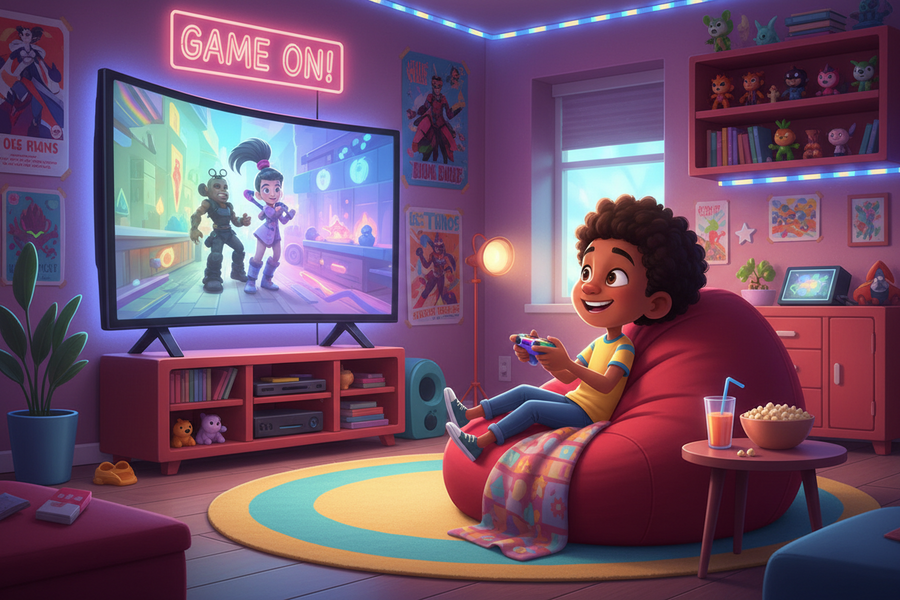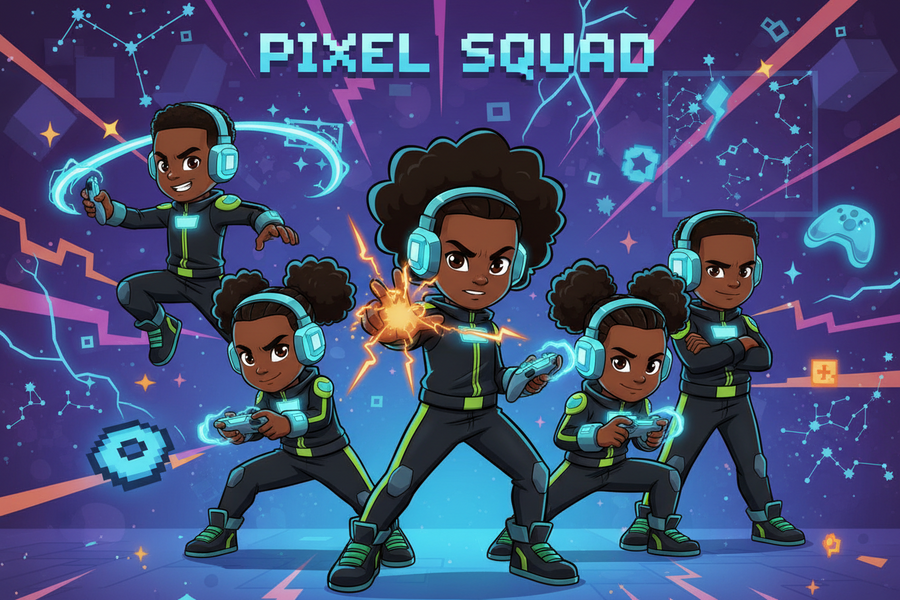

Start with what he already loves
If you’ve ever found yourself saying, “I just want him to read more,” you’re not alone.
For many parents—especially parents of boys—the challenge isn’t intelligence. It isn’t ability. It isn’t even attention.
It’s resistance.
And most of the time, that resistance shows up because reading feels like replacement.
Replace the game. Replace the screen. Replace what he enjoys.
But what if the goal isn’t replacement?
In What Video Games Reveal About Black Boys’ Strategic Thinking , we looked at what gaming is actually building—strategy, pattern recognition, leadership under pressure.
If those skills are already there, reading doesn’t have to compete. It can connect.
1. Match Energy, Don’t Lower It
A boy who loves action, world-building, and competition will not suddenly crave slow, lesson-heavy stories.
He needs adventure. Stakes. Movement.
Books that feel like quests, not assignments.
2. Remove the Performance
If reading becomes a test, he’ll treat it like one.
Don’t quiz him. Don’t correct every word. Don’t measure speed.
Let the story exist without pressure.
As shared in Why I Write Books Where Black Kids Don’t Have to Prove Anything , children don’t need to earn their space in a story. They don’t need to prove intelligence before they enjoy imagination.
Reading becomes easier when it feels safe— not evaluated.
3. Make It Expansion, Not Subtraction
Instead of, “Turn that off and read,” try, “This feels like the kind of world you’d like.”
You’re not taking something away. You’re expanding what he already enjoys.
Stories like Tee Jay & Boney: Defenders of the Backyard Portal carry that same strategic, world-building energy— teamwork, portals, problem-solving— without feeling like homework.
The shift isn’t about forcing a habit.
It’s about recognizing identity.
A boy who loves games already loves narrative. He already understands progression. He already understands character development.
Reading becomes another arena where he can lead.
Dream Big, Dream Often — TL