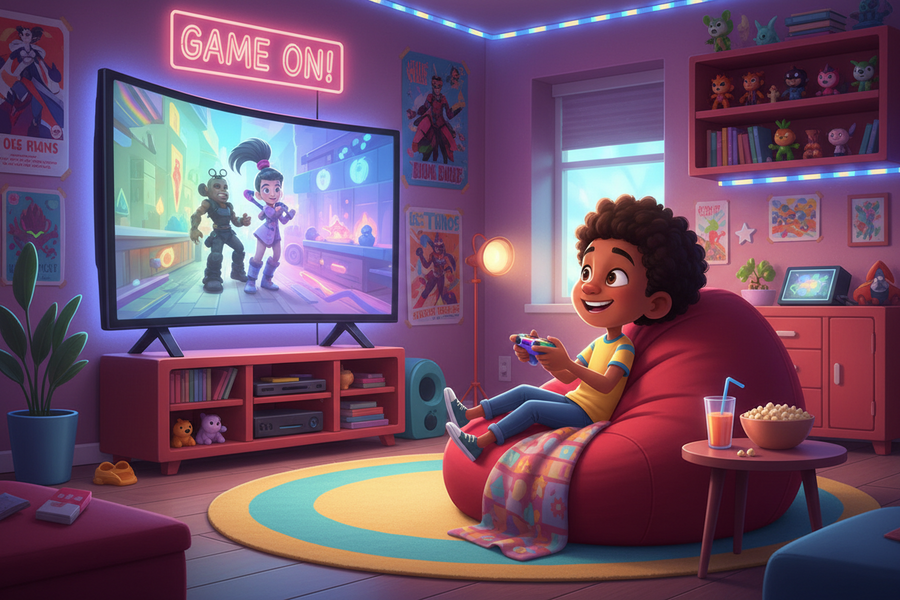

Why curiosity, play, and imagination are signs of healthy growth—not problems to solve
Many parents carry a quiet worry they rarely say out loud. Is my child doing enough? Are they focused enough? Should I be correcting this? Especially for Black parents, that question can feel heavier than it should.
But the truth is simple and grounding. Nothing is wrong with your child.
Curiosity is not a flaw. Play is not wasted time. Imagination is not distraction. These are signs that a child feels safe enough to explore the world from the inside out.
Children don’t develop in straight lines. They grow through movement, questions, stories, laughter, and pauses. When kids drift into play or wonder aloud, they are not avoiding growth. They are actively engaged in it.
Black children, in particular, are often viewed through a lens of correction. Too energetic. Too quiet. Too imaginative. Too curious. But development doesn’t need constant improvement plans. It needs room.
When parents resist the urge to fix what isn’t broken, children receive an important message: you are whole right now. That message builds confidence far more effectively than pressure ever could.
Many families already create this space without realizing it. Through everyday routines. Through laughter and shared stories. Through allowing kids to be fully themselves at home.
That reassurance was explored last week in How Family Stories Help Kids Understand Who They Are , where children see themselves reflected without explanation.
It also lives in the environments families build, as reflected in Creating a Home Where Black Joy Feels Normal , where safety and belonging are part of everyday life.
Children don’t need to be improved before they are affirmed. They don’t need to earn space to grow. They need to be trusted.
If your child is curious, playful, imaginative, or still figuring things out, that isn’t a problem. That’s development doing exactly what it’s meant to do.
Dream Big, Dream Often — TL