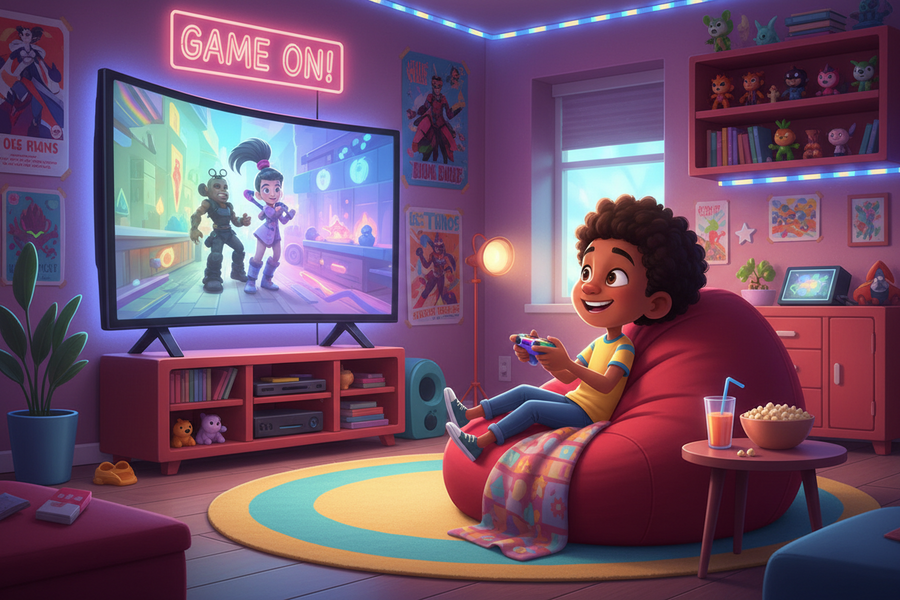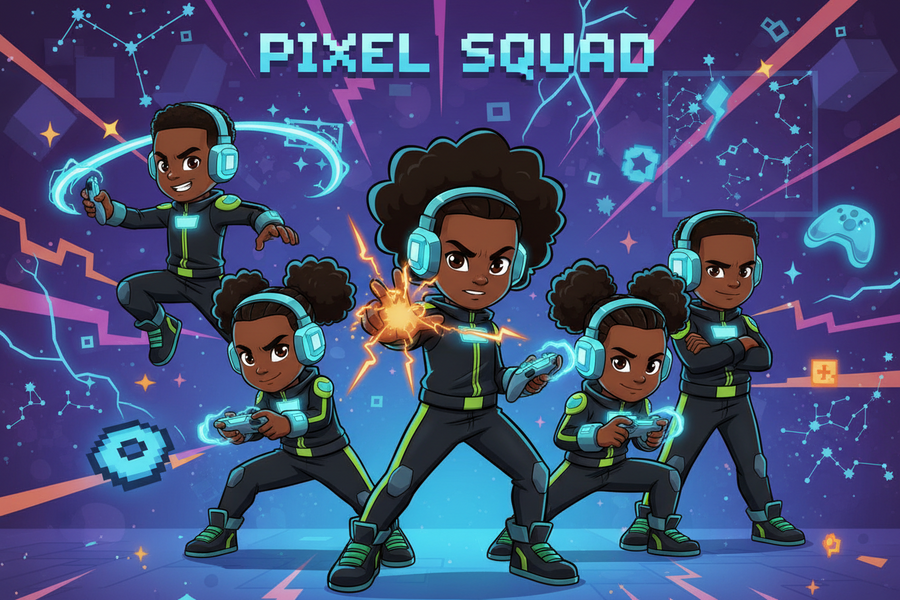

Not all screen time is created equal
“Too much screen time.”
It’s one of the most common concerns I hear from parents.
And while balance matters, I’ve been thinking about something deeper.
What if we’re labeling all screen time the same — when some of it is actually strategic thinking in motion?
In What Video Games Reveal About Black Boys’ Strategic Thinking , we explored how gaming often requires resource management, pattern recognition, adaptability, and leadership.
That’s very different from passive scrolling.
Strategic gaming asks boys to:
Solve problems under pressure. Track evolving systems. Make quick decisions. Learn from failure in real time.
That isn’t mental shutdown. That’s cognitive rehearsal.
And for Black boys especially — who are often watched, corrected, or misunderstood in other spaces — digital worlds can feel like places where they control the narrative.
That sense of autonomy matters.
As discussed in How to Get My Son to Read Without Fighting Him , the goal isn’t to fight what they love. It’s to recognize the skills already forming.
The real conversation may not be screen time vs reading.
It may be passive consumption vs active thinking.
And once we see that difference, we can guide expansion instead of restriction.
Stories become one of those expansions.
A book like Tee Jay & Boney: Defenders of the Backyard Portal carries that same strategic, world-building energy — teamwork, exploration, decision-making — without feeling like a replacement.
The goal isn’t to eliminate screens.
It’s to recognize thinking when we see it.
When parents understand the difference, discipline becomes direction. And restriction becomes guidance.
Black boys aren’t just consuming content.
Many of them are rehearsing strategy.
The question isn’t whether they’re thinking.
It’s whether we’re noticing.
Dream Big, Dream Often — TL